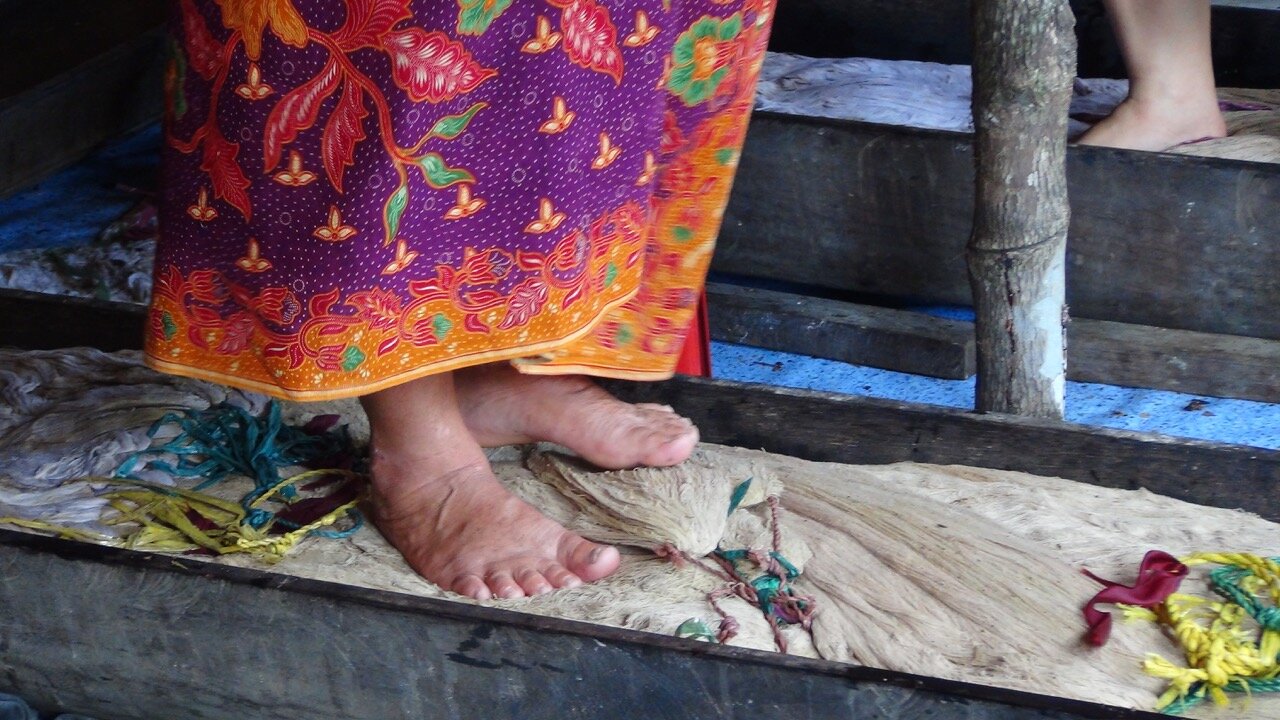
The origins of Iban weaving
The folk tradition of Iban weaving tells the story of Dara Tinchin Temaga, the daughter of the god of war, Lang Singalang Burong courting an ordinary man, Menggin. The story starts with Menggin, an Iban hunter who shot a beautiful bird with his blowpipe. As he ran to retrieve his game, what he found was a woven skirt instead of a bird. He kept the woven skirt as he had never seen one before. As he walked back he stumbled on Dara Tinchin Temaga. She kindly asked Menggin if he had seen a woven skirt. Menggin told Dara Tinchin Temaga about the bird he shot with his blowpipe that turned into a woven skirt. Dara Tinchin Temaga claimed her woven skirt and soon, they were married, and had a son, Sera Gunting. Dara Tinchin Temaga wove a pair of baju burung, jackets for Menggin and her son. She told them that if they would like to follow her home, the other world, they have to wear the jackets. When Dara Tinchin Temaga decided to return to her home, Menggin and Sera Gunting donned their jackets and accompanied her. Lang Singalang Burung posed a series of trials for Sera Gunting as he did not believed that he was his grandson but Sera Gunting passed every trial at ease. Finally, Lang Singalang Burong acknowledged Sera Gunting and taught him the rules of adat, customary law of the Iban, bird augury relating to farming and warfare, the ritual treatment for trophy heads, rituals for the dead, and all the rest of vast corpus of Iban law (adapted from Margaret Linggi “The ties that bind” (2001) & story told by Bangie ak Embol).

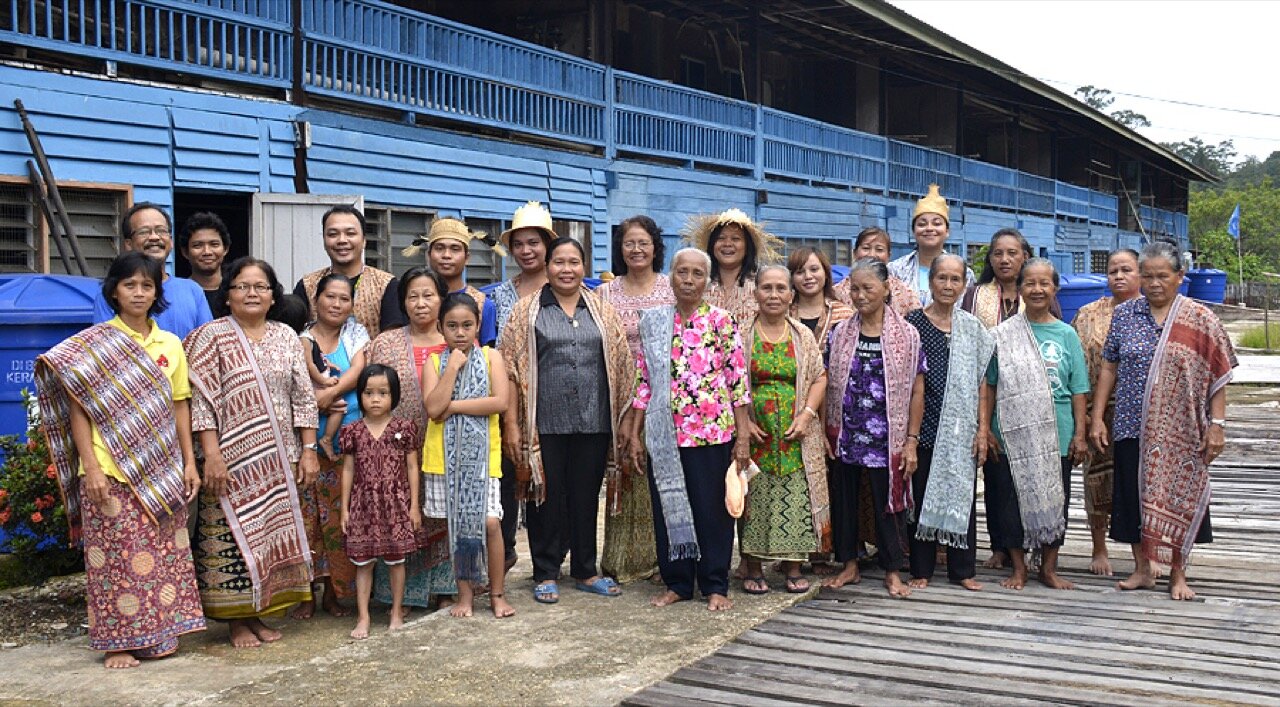
Ngar – Ritual of mordant bath
In Iban community, weaving was a criteria for evaluating the status of a woman. A woman weaver, capable of designing and weave a meaningful pua kumbu through her own ingenuity plus able to perform a ritual of mixing mordant bath, known as indu’ takar, indu ngar. She is recognised as a mystic woman as it is believed that her knowledge of mixing the mordant is based on her mystical relations with an ancestral weaver. She received an instruction in her dreams and the performance of ngar is to fulfil that dream. The pua kumbu she’d weave based on this dream is her very own individual intellectual property rights.